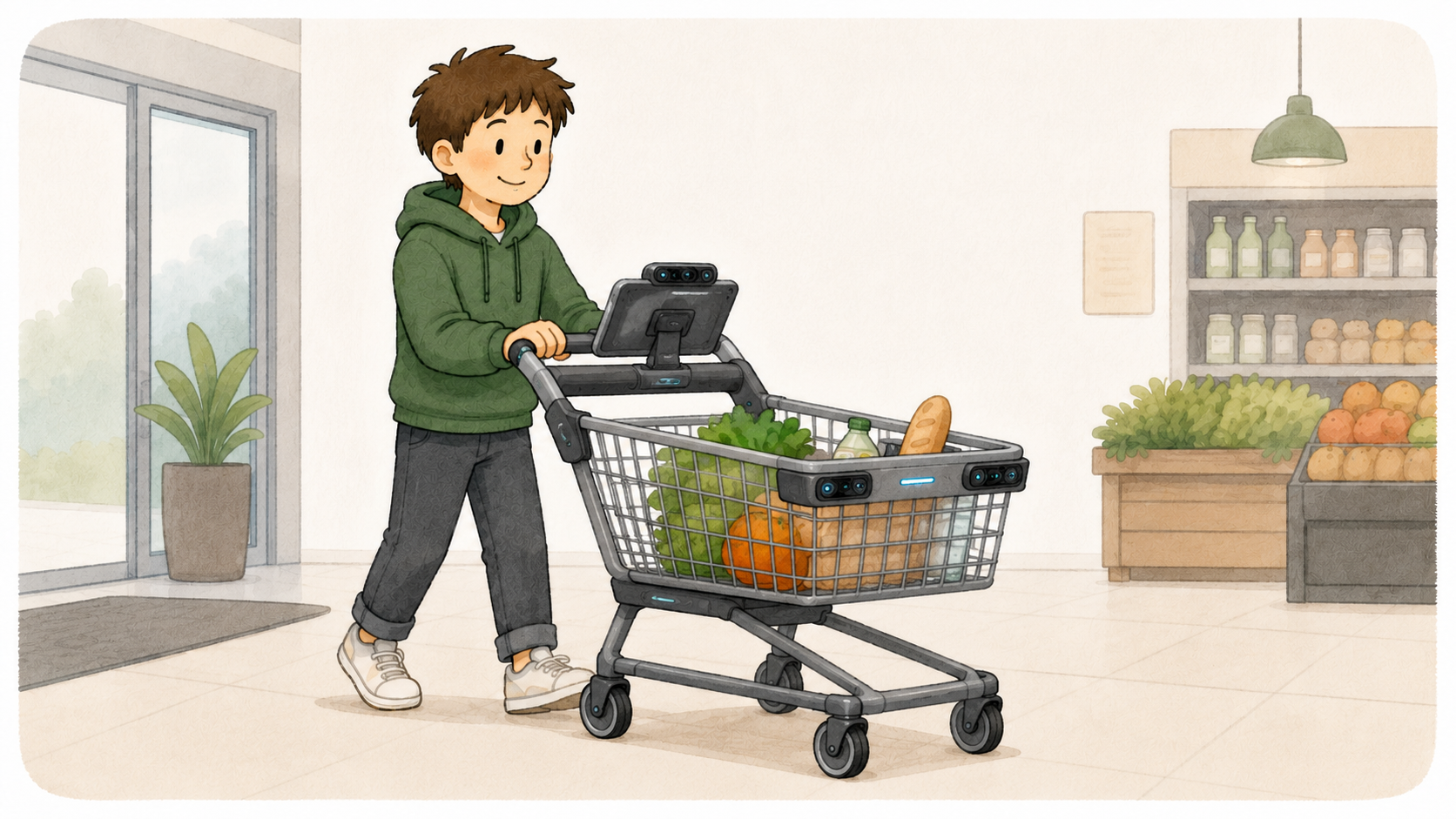
A Redditor recently spotted a line of suspiciously high-tech shopping trolleys at Morrisons in Preston, which is surprising, given most supermarket trolleys are usually found abandoned in a ditch, wedged against a kerb, or somehow three miles down the road.
These, however, were neatly lined up and fitted with screens.
So what exactly are they?
Looking at the image, the trolleys have branding from Instacart, an American food shopping service, and also have the logo from Caper.
These “Caper Carts” are a new addition announced by Morrisons UK in early 2026. They’re marketed as “AI-Powered Smart Trolleys” and were found in Riversway Morrisons in Preston, which lines up with recent reporting that the Preston branch is expected to be the first trial site.
So what exactly do these AI-powered smart trolleys actually do?
Not what you might think. They’re not chatting away with you down the bread aisle about the most optimal grain for your dietary needs. Instead, they turn the trolley into part basket, part scanner, part checkout, and part advert screen.
Instacart says Caper Carts let customers scan items as they shop, track their running total in real time, use built-in scales for fresh produce, and complete the shop by scanning a barcode from the trolley screen at self-checkout. Morrisons customers are also expected to get Morrisons More Card integration, which means loyalty prices and offers can be tied into the trolley experience.
In practice, this isn’t a long way from the self-scanning technology already found in most supermarkets, where you pick up a handheld scanner and scan items as you go. The difference is that the scanner, screen, scales and basket have all been bundled into the trolley itself.
So where does AI come in?
The marketed functionality comes from the recognition, checking, and assistance behind the scenes. Caper Carts use computer vision and sensors to help identify items, confirm what has been added to the trolley, handle loose produce, and reduce the amount of manual scanning needed. In theory, the trolley should be able to understand what is going into it, what has been removed, and whether the basket matches what the customer has scanned.
To be fair, that could be useful. A trolley that knows your running total, recognises loose fruit and veg, and helps prevent missed scans could make shopping faster and less annoying.
I have been that person many times, doing a huge food shop with a handheld scanner, getting selected for a security check, and then having the internal panic of wondering whether I definitely scanned everything.
In rare cases, I’ve also been distracted going around the store and realised I may have missed an item. Not because I was trying to get away with anything, but because shopping is full of distractions:
- Comparing prices.
- Checking my phone against a list.
- Trying to work out if an offer is actually worth it.
- Dodging other customers.
- Avoiding going overboard with clubcard prices.
So in that sense, a trolley that helps catch mistakes before you get to the checkout could actually be useful.
But whether that convenience is worth supermarkets collecting even more data about how we shop, what we buy, what we nearly buy, and how we move around a store?
That’s up for debate.
What do you think?