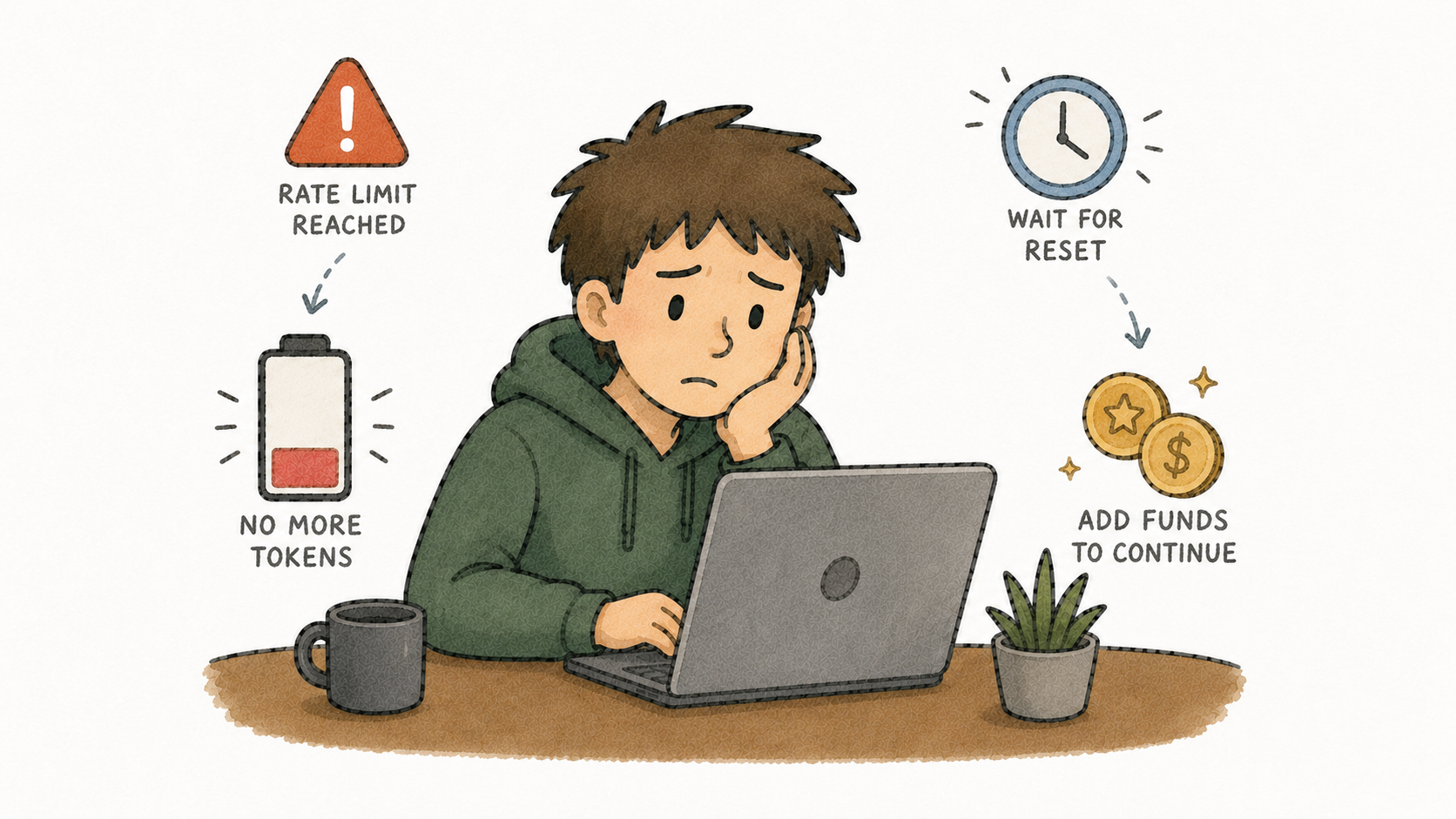
Coding with AI can be useful and fun. Personally, I have “vibe-coded” a lot of personal apps that I use daily, based on specific things that either aren’t available in software I use, or basic functions that some apps charge for but can be performed with a small script or personal app.
I will tiptoe around this subject as I know there’s strong opinions out there on this topic, however in my case, I treat this the same as copying and pasting a script found from the internet, I have no intention of sharing or making money from purely vibe-coded code without knowing what the code does.
But there’s something that can quickly put an end to a session of coding:
Rate Limits, also known as Usage Limits.
Using the best “models” is not cheap, and unless you have big-bucks to pay the likes of OpenAI, Anthropic or Google, at some point you’ll hit a rate limit, especially when you use their subscription plans.
“Tokens” are the currency of the AI world, and the more you build up context, the more tokens you use. Build a web app and need one slight tweak? That’s another request that needs to understand the previous requests, the code, and the wider context, using more tokens.
Hit the limit? Unless you’ve added funds to your account for overage, that’s it. No more models. You’re back to manually coding, waiting for a reset, or finding an alternative model and starting over with that context.
Want to go all-in in a small space of time? Subscriptions come with a 5 hour limit, and a weekly limit, and the portals to display the usage hide the actual usage, so it’s possible that the limits can change on the fly / be “nerfed” / be reset.
As example, this happened 3 days prior to this post:
So your coding capacity is literally in the hands of the people who can press the reset button.
There are some methods that people use to try and scrape as many tokens as possible:
- Context Specific Requests: The more details you provide to the model, the less it has to guess, which can save tokens.
- Frequently resetting sessions: Effectively starting again with a conversation, so trails of previous messages and requests are lost.
- Dropping down a model: Using a lesser capable model to perform simpler tasks.
- Parallel tasks: Using a complex model, where possible with “agents”, depending on the software used to delegate tasks to cheaper or lesser models.
It’s a strange kind of limitation, because it doesn’t feel like traditional software hitting a wall. It feels more like your flow being cut off halfway through a thought.
One minute you’re building something useful, tweaking your own little app to work exactly how you want it.
The next minute, the model says no, forgets what you were doing, and waits for more coins to be put into the AI token meter.
No more vibes for you today.
What do you think?